Robert Caro doesn’t just start with a detailed outline before he starts writing his books. He starts with a clear idea of how he’s going to end it.
“I can’t write a book until I know the last line,” he said on a recent Q&A podcast episode with C-SPAN.
I’m also a big outliner — but not a last liner.
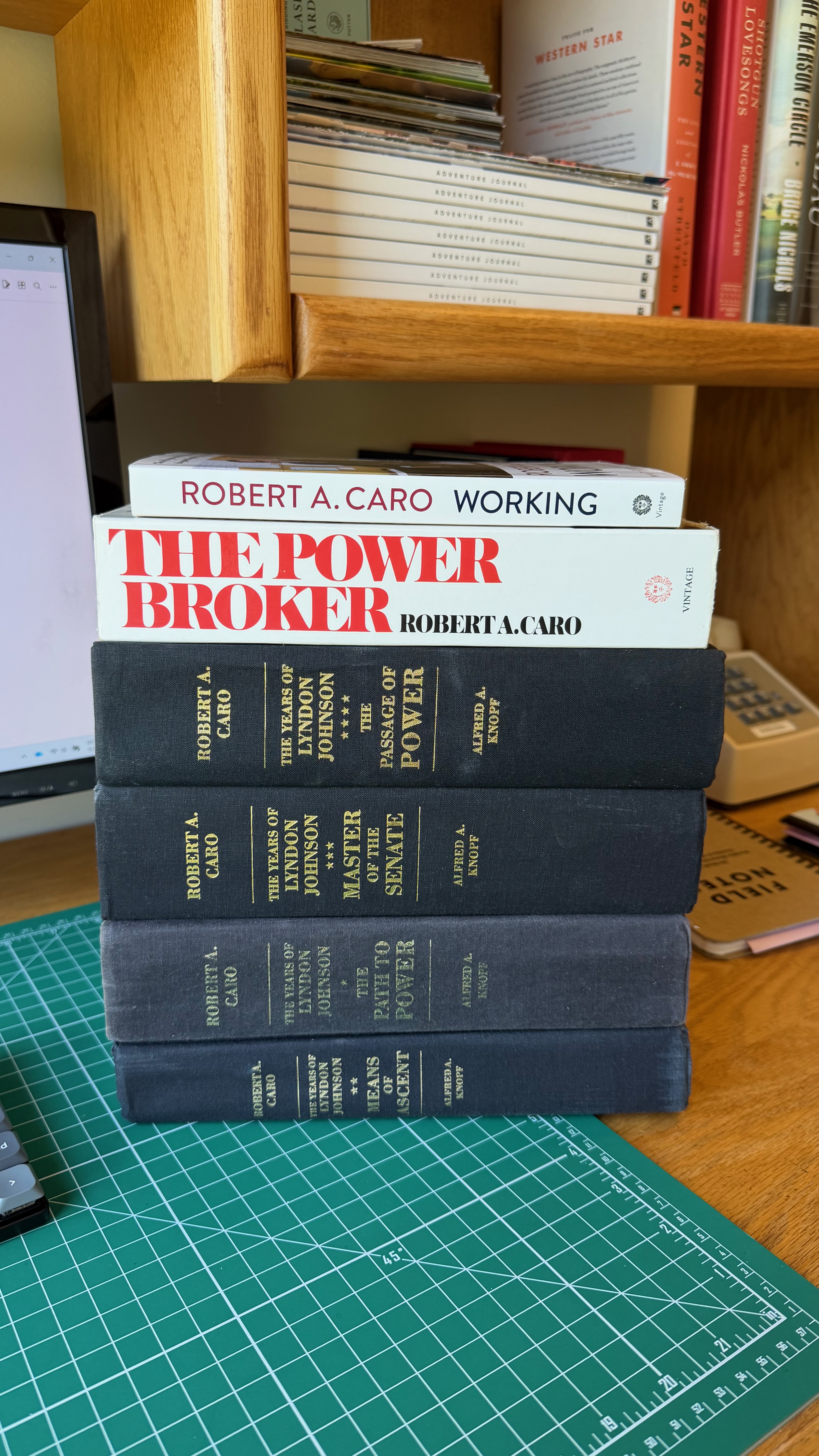
Caro tells how when writing his first book — ”The Power Broker,” a thick biography about Robert Moses, the most powerful man in New York City — he had finished his research but had no idea how to start. There was too much material. He had no idea how to begin (something a lot of creatives can relate to!).
So he went to hear Moses speak at a public ceremony, where Moses kept wondering aloud why more people weren’t more grateful to him for all he’d done for New York City.
He was talking and asking, “‘Why aren’t people grateful? Why aren’t they more grateful?’ And all of a sudden, I thought of the last line of the book, which is “Why weren’t they grateful?” And all of a sudden, I knew how to outline the whole book, and I remember I ran back to my office, I couldn’t wait to get back, and I sat down and outlined “The Power Broker” from beginning to end in a rush,” said Caro.
Caro shares more about his writing process in his book “Working,” which I read with glee after watching his and Robert Gottlieb’s documentary “Turn Every Page.” Caro writes his first drafts in longhand on a legal pad before typing them up on a Smith Corona Electra 210.
The hard part about writing isn’t the writing — it’s the thinking. By outlining first and then writing his drafts by hand, Caro forces himself to slow down his thoughts, figure out what he’s trying to say, and then focus on writing well.
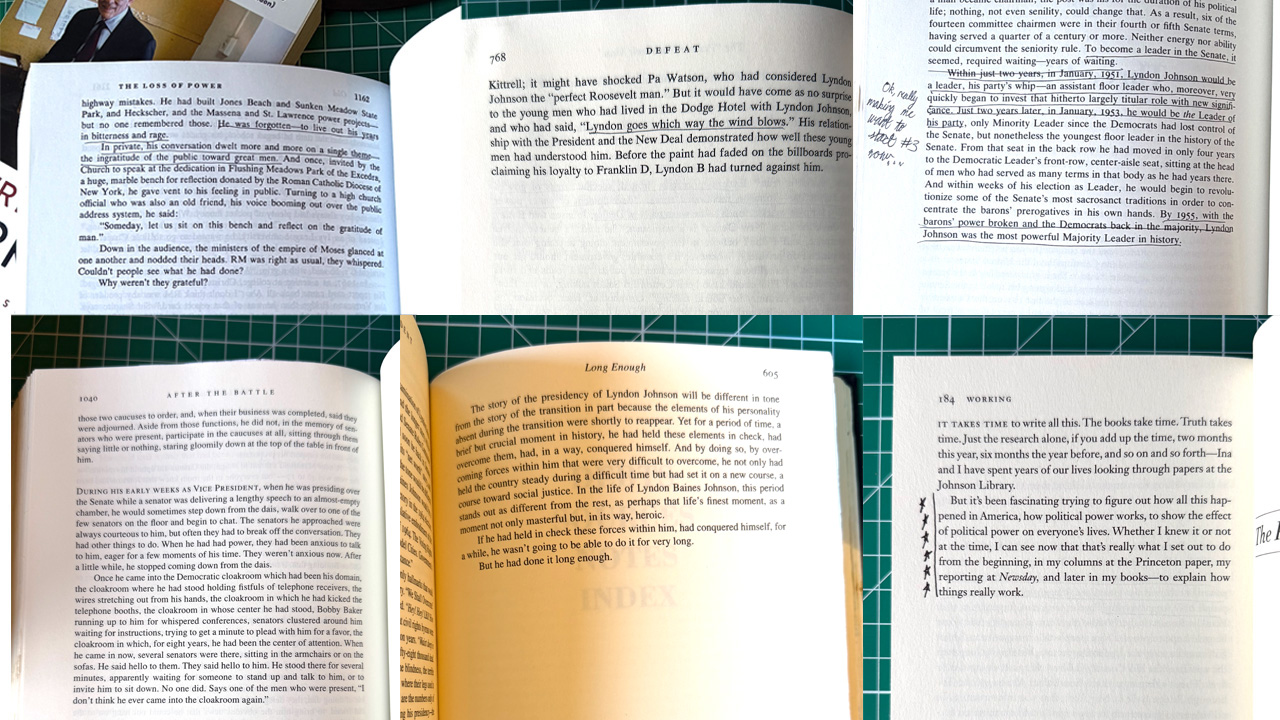 The last lines of Caro’s books (Clockwise from top left: The Power Broker, The Path to Power, Means of Ascent, Working, The Passage of Power, Master of the Senate).
This is my biggest gripe with people using AI to write: losing the thinking that goes into writing. Outsourcing your writing to a machine might get you words faster, but fast is irrelevant if it brings you somewhere you didn’t mean to go. Worse, you might not even stop to think and recognize it brought you somewhere you didn’t mean to go.
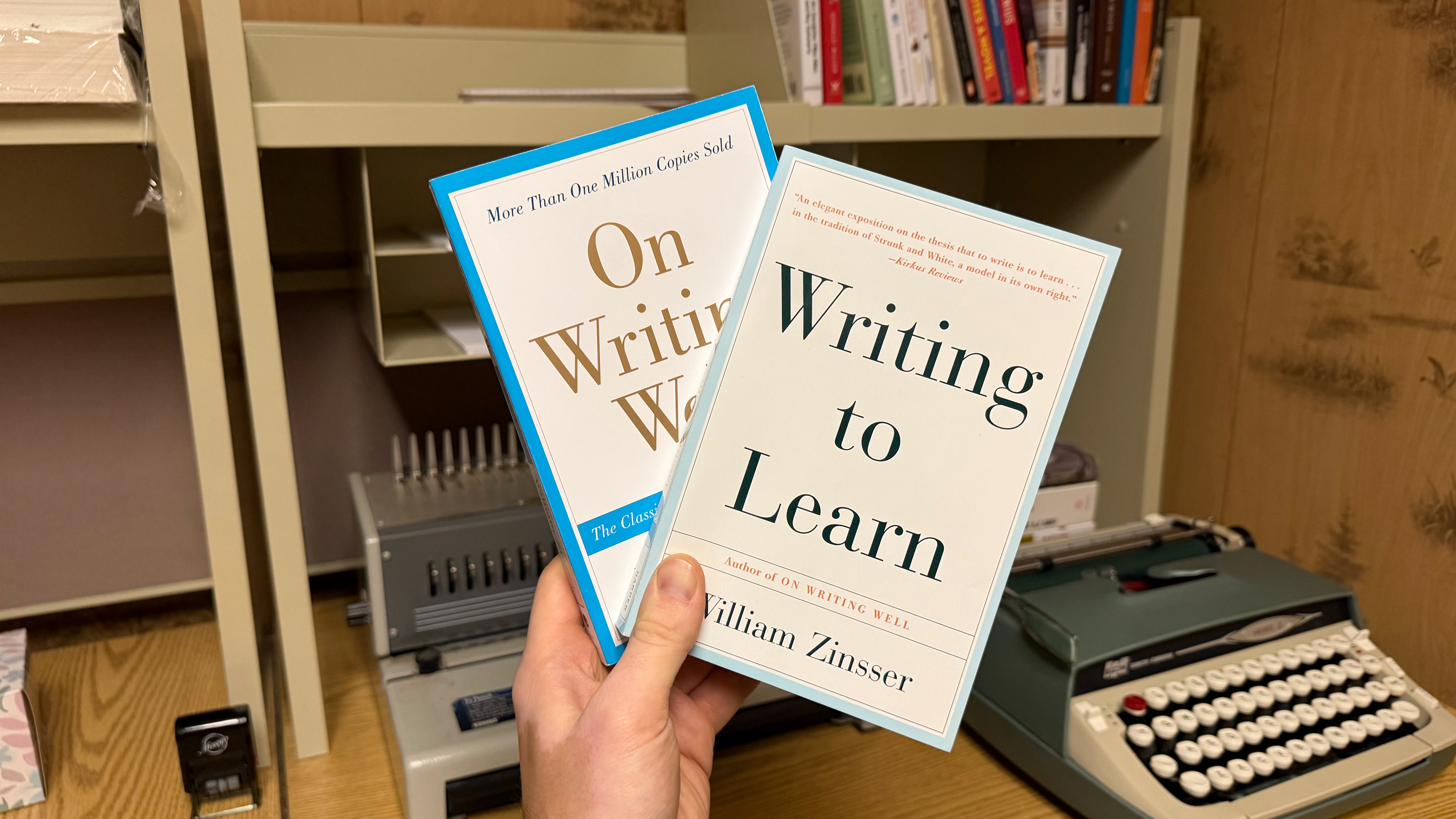
William Zinsser wrote a book about how the process of writing is really a process of learning and understanding. He’s most-known for his book “On Writing Well,” but I actually took more away from “Writing to Learn.”
“We write to find out what we know and what we want to say,” Zinsser says. “Writing and thinking and learning [are] all the same process.”
“Writing is how we think our way into a subject and make it our own. Writing enables us to find out what we know — and what we don’t know — about whatever we’re trying to learn,” he says.
Zinsser’s focus on writing being the process of thinking reminds me of Ralph Waldo Emerson, who often wrote in order to find what he had to say. While Caro doesn’t actually get started writing until he has a detailed outline with the last sentence, Emerson would just sit down and start writing to find out if he had something — anything — to say.
“You should start with no skeleton or plan. The natural one will grow as you work. Knock away all scaffolding,” he said to a younger friend. “There is no way to learn to write except by writing.”
For Emerson, writing is a process to think out loud, to find what you have to say. Focus on the process, not the end-product.
For Caro, the thinking comes with the researching and outlining. The writing is a distillation to focus on what you want to say to your audience and how to say it well.