A few weeks ago Austin Kleon wrote that when he wants to get into something new, his first step isn’t to search Google but search his email inbox instead. It’s a personal, searchable archive of people you follow — so it usually turns up good recommendations for your new topic.
I do something similar. Not in my inbox, which is less an interesting archive than a stress-inducing to-do list for me.
Instead, I search my Notion database I created years ago to save interesting articles on the web.
Here’s what it looks like:
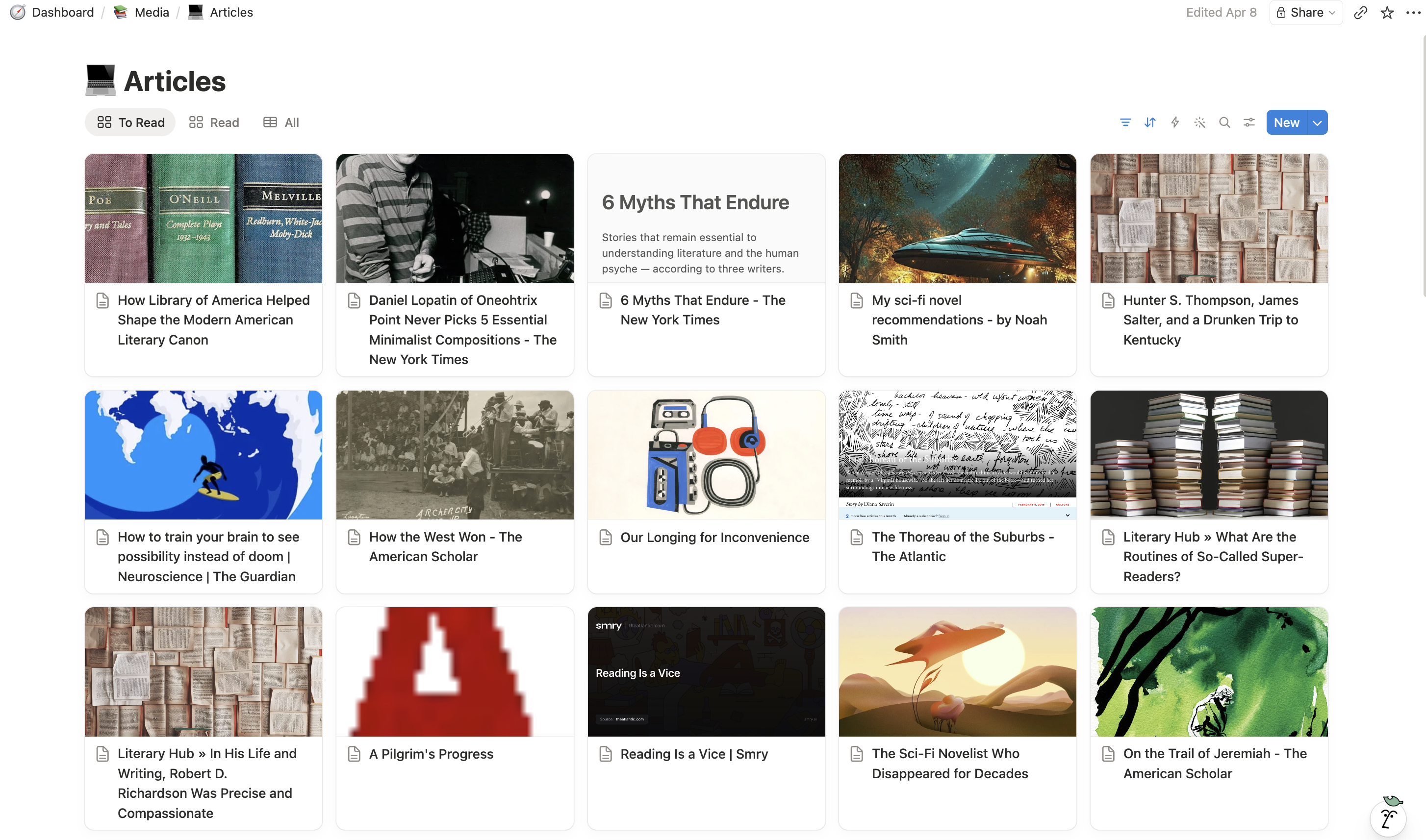
I created this years ago to replace Pocket, which allowed you to save articles to read later. What I liked about Notion is that it also let me highlight, make comments, and save information (like how I found the article for later.
What started out as a neat way to save articles, though, eventually became a huge list of articles I found interesting but hadn’t — and might not ever — read. At first, it felt like a to-do list of articles I hadn’t gotten around to reading yet.
But later, I realized something else: it’s really nice to have a big repository of things you find interesting! I’ve saved hundreds articles about the writing habits of authors, book lists, transcendentalists, artists, national parks, typewriters, and culture. It’s handy when I’m bored and want something to read.
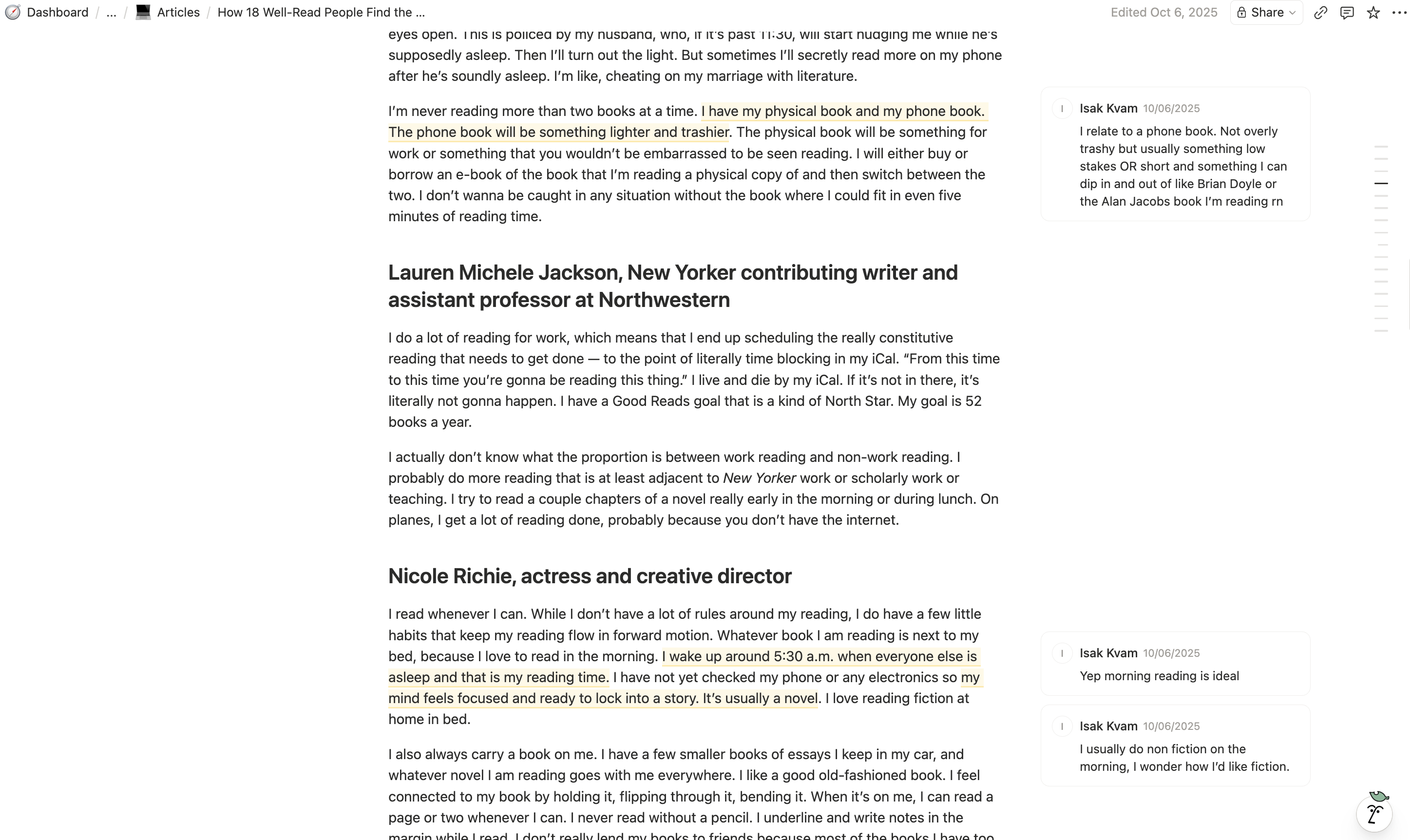
A nice bonus is how it often gets rid of ads, so it looks really clean on my computer and on my phone:
It reminds me of a Japanese word “Tsundoku,” which means leaving a book unread after buying it, typically piled up together with other unread books (apparently I practice Tsundoku on my nightstand, office desk, and closet).
Similarly, Nassim Talib wrote about Umberto Eco’s massive home library, which became a sort of antilibrary: entire bookcases that Eco wouldn’t get around to reading but which served as a reminder of all the knowledge he didn’t have, the blind spots he carried with him.
“Read books are far less valuable than unread ones. The library should contain as much of what you do not know as your financial means, mortgage rates, and the currently tight real-estate market allows you to put there. You will accumulate more knowledge and more books as you grow older, and the growing number of unread books on the shelves will look at you menacingly. Indeed, the more you know, the larger the rows of unread books.”