I like to daydream about the perfect writing space. Usually it’s a cabin in the backyard with a desk, big windows, a shelf of books, a coffee pot, and — if I’m really treating myself — a wood stove and sleeping cot. Somewhere I can get away from all my cares, distractions, and worries to do good work.
It’s not really about the actual space. It’s the daydream that the space would unlock something within you, that you’d finally overcome your blocks and weaknesses to unleash your full creative potential. And in that way, it really is a daydream.
It reminds me of how someone said when you’re buying a big stack of books, you’re not so much buying the actual books as buying the time you want to spend reading them. You’re excited for the book, sure, but really you’re daydreaming about having long afternoons to lose yourself in it, even if that doesn’t happen. There’s a daydream in what the experience would give you, not the thing itself.
But still, the perfect writing space beckons. Usually I want to get away from my distractions so I can really focus on my work. But I know that the internet, my main source of procrastination, would still follow me there. “Wherever you go, there you are.”
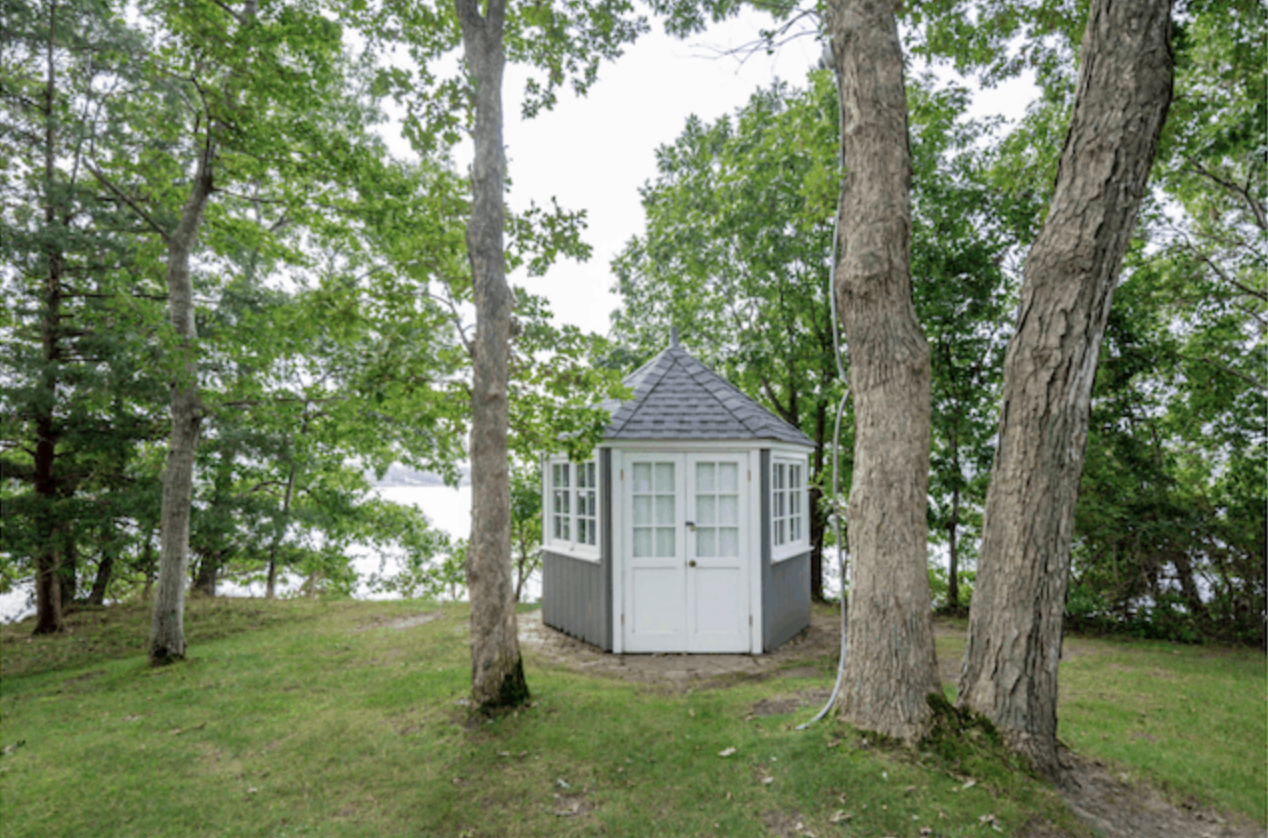 Steinbeck’s writing house, courtesy of Gavin Zeigler for Sotheby’s International Realty.
John Steinbeck has a 100-square-foot hexagonal “writer’s house” overlooking the water where he’d spend his mornings writing. But even that didn’t work for him! When he really had to stop procrastinating and work, he’d pull a portable desk onto his old fishing boat and drive it out into the middle of the harbor.
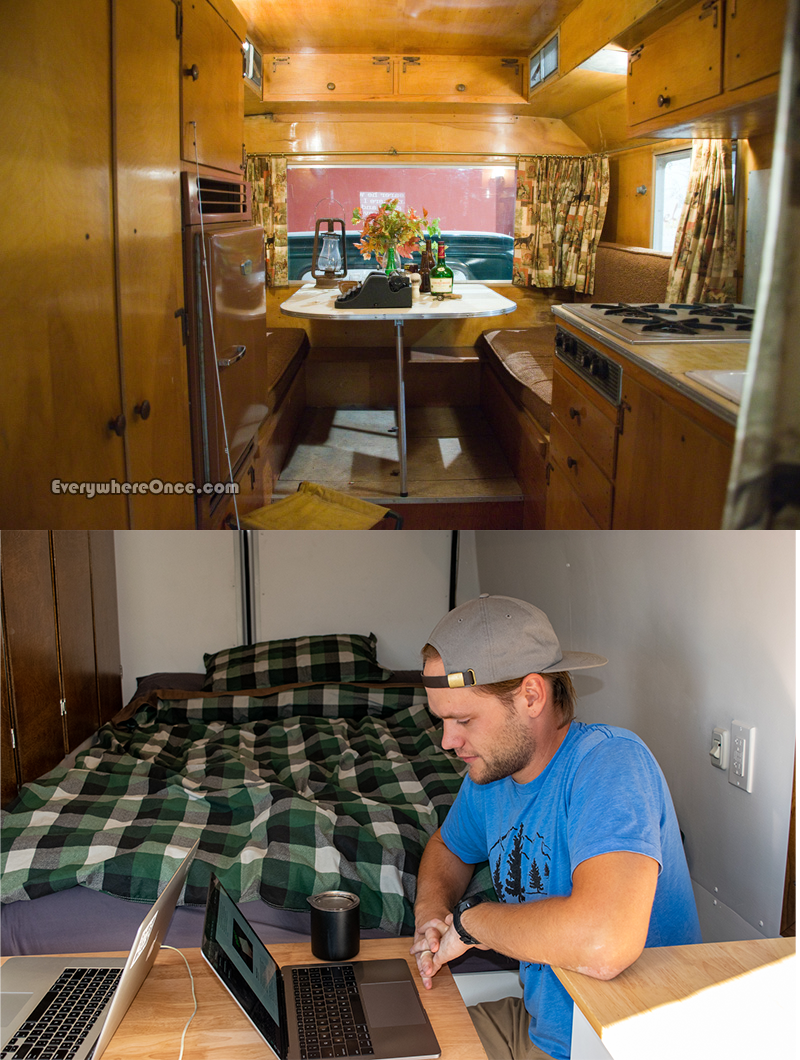
He also wrote in his truck camper (the Rocinante) that he traveled in for his book “Travels with Charley.” His camper reminds of the five years I traveled and wrote in my van across the West.
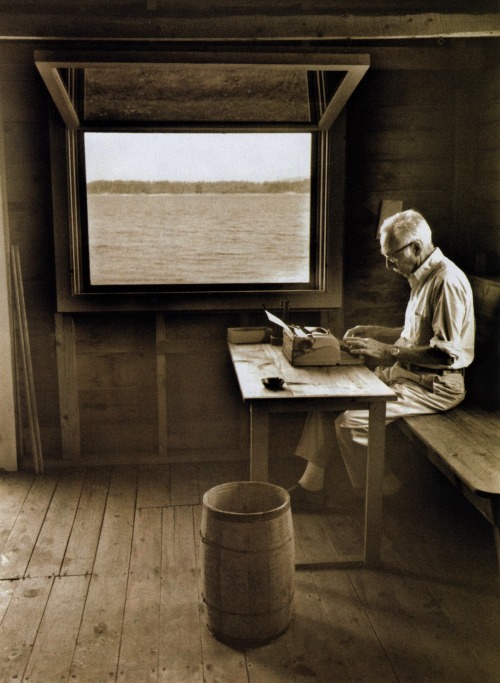
There’s something about sparse writing spaces and the water, like E.B. White’s lakehouse that he’d write in.
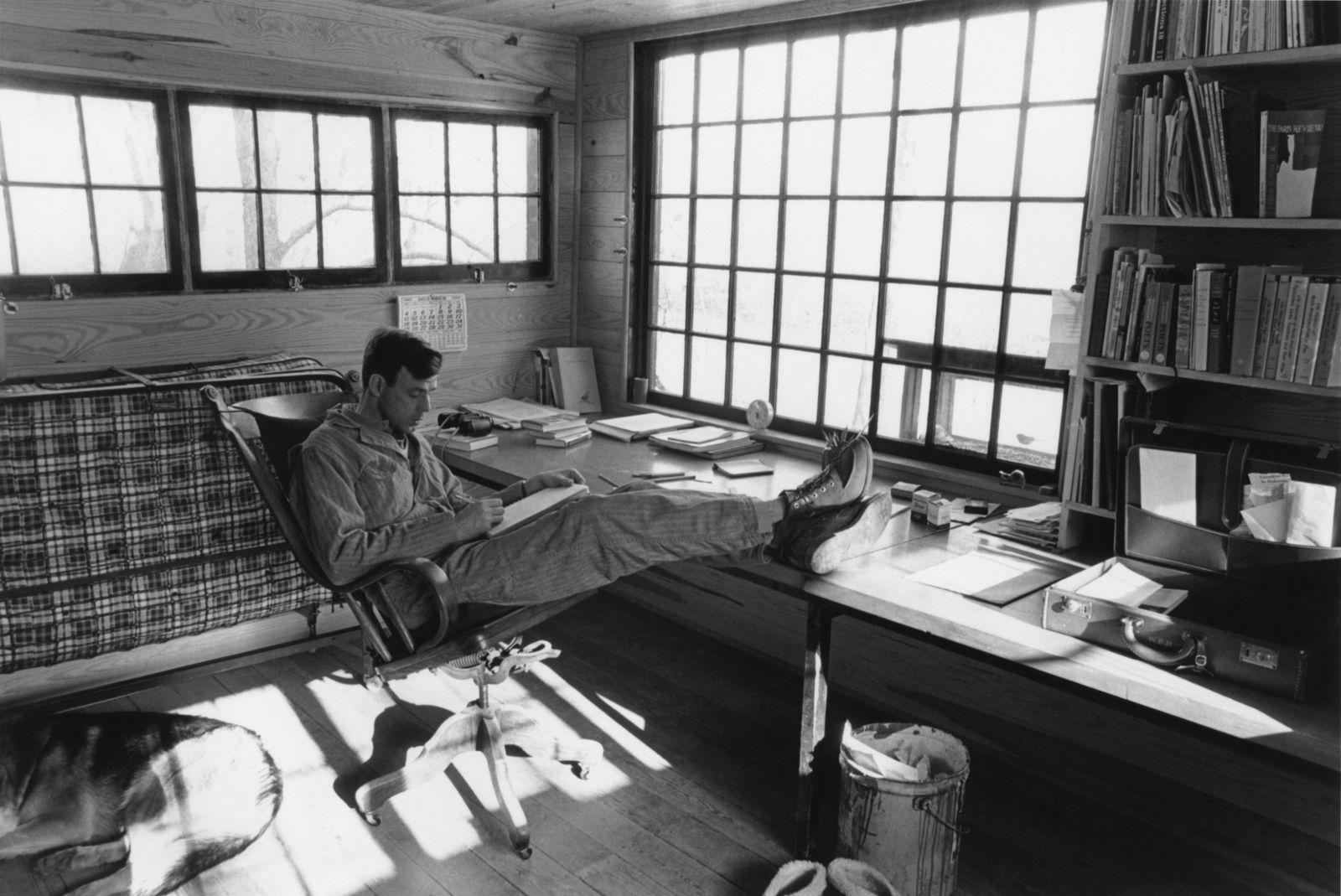
Wendell Berry converted logs from his great-great-great-grandfather’s log house to make a writing cabin. He’s written 52 books here. “I do not see that computers are bringing us one step nearer to anything that does matter to me: peace, economic justice, ecological health, political honesty, family and community stability, good work,” he said.
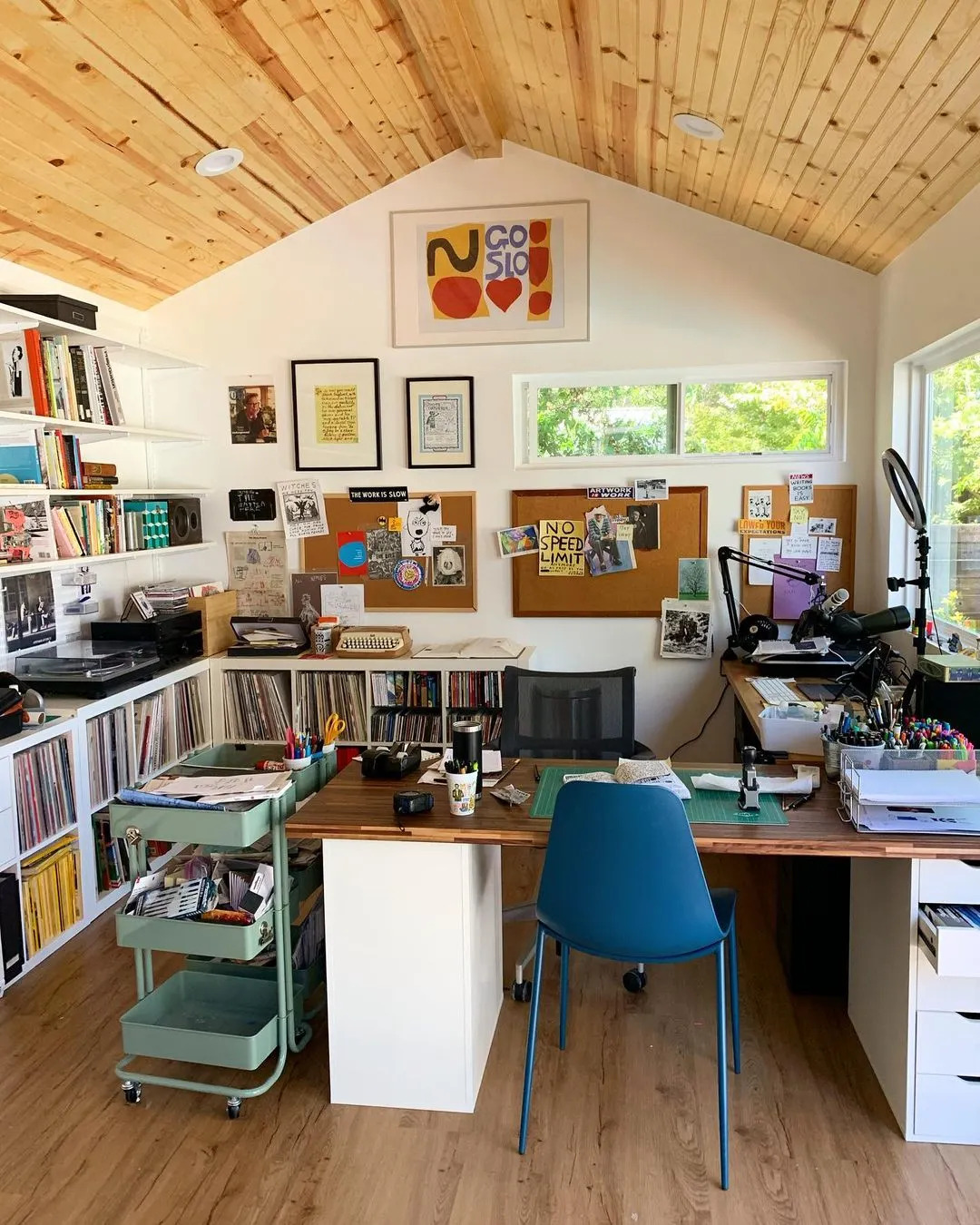
That’s not to say I only daydream of sparse, minimal writing shacks of yore. If I had to swap with somebody in a moment’s notice, I’d pick Austin Kleon’s studio in his backyard, complete with his digital desk, analog desk, and plenty of physical media goodies: vinyls, books, mix tapes, zines, markers, typewriters — a dream spot to work, plus a pool beckoning to spend your afternoon.
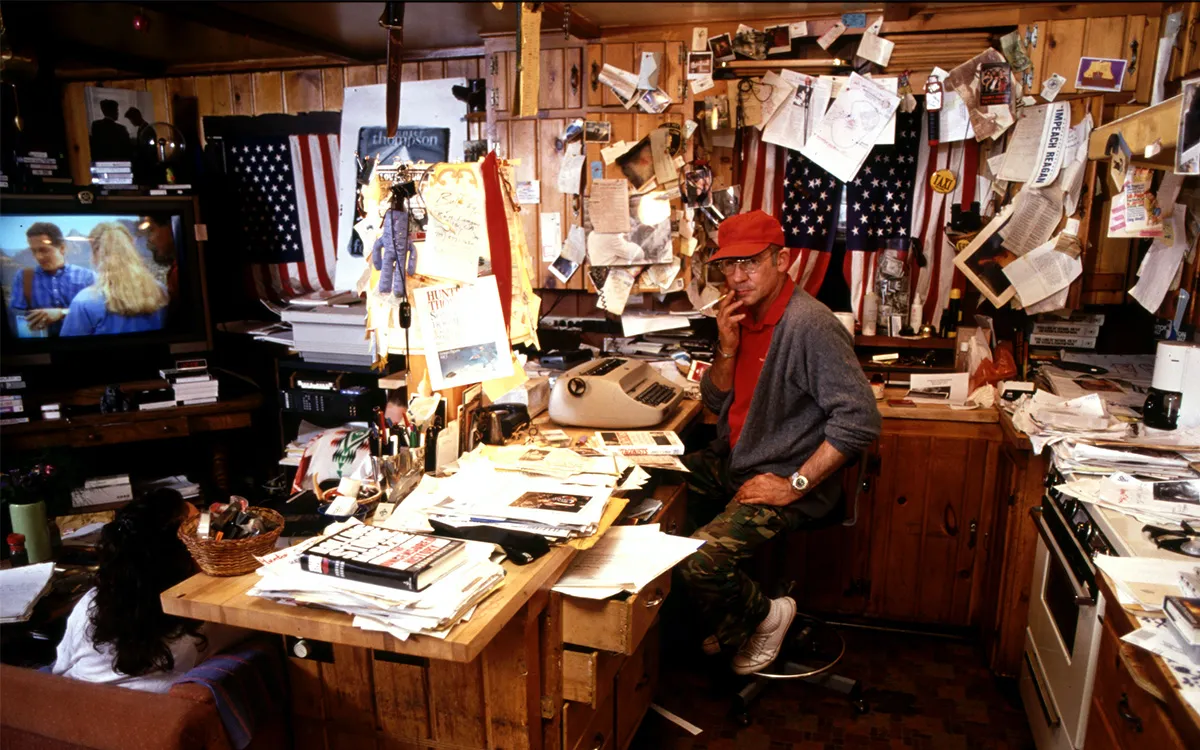
Hunter S. Thompson did a lot of his writing inebriated in hotel rooms. But his home writing set-up is truly chaotic. If I ever need permission to get messy, one look at HST’s spot gives me more than enough license. Thinking of his writing style, it’s really not surprising!
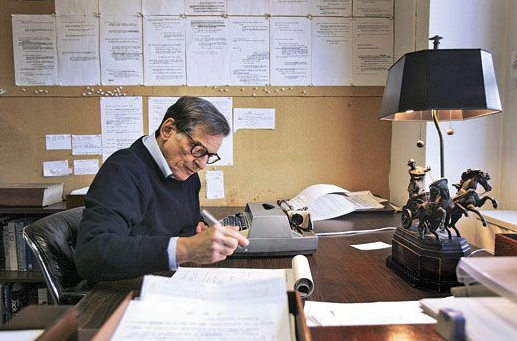
Robert Caro rents a small office near Central Park to write. In true Caro fashion, he’s got a detailed outline of the book pinned to the wall, his first drafts written in longhand, his newer drafts typewritten on his Smith Corona Electra 210.
I know deep down that I already have everything I need to keep going: I have ideas, I have books and inspirational media, I have a computer, and I have a surface to plop it on. Most of my “I want a new writing space” daydreaming is what Casey Neistat calls the “busy work procrastination” — the stuff that feels like work but isn’t really getting you any closer to your creative goals.
Maybe everything’s good in moderation: that annoying platitude of advice that’s too generic but still helpful. You don’t need a perfect writing cabin to do your best work. But you do need a space that works for you — no matter how sparse or crammed it is.
The one writing space I think about the most, though, when I’m daydreaming of having a writing cabin is Kim Stanley Robinson’s. The sci-fi turned cli-fi turned non-fiction writer has had a prolific career, but all he’s decided he needs is some fresh air, shade, and a fan to keep him cool:
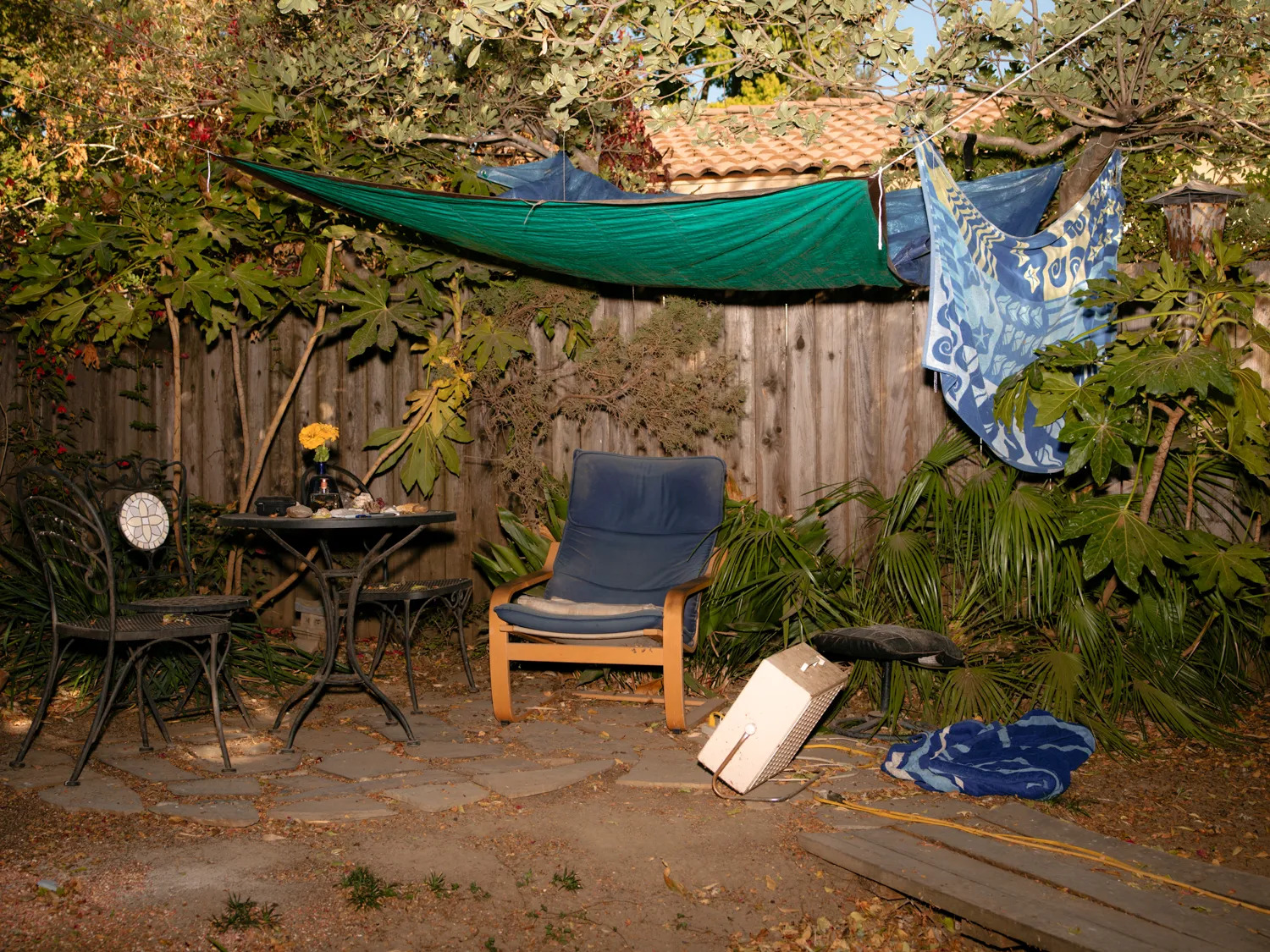
Aesthetic? Nope. A great reminder that I already have everything I need to keep going? Yep.